
Kochō’s Hot Springs
through the drifting steam,
the essence of culture reveals itself.
A gentle river breeze drifts through the baths, bringing a refreshing sense of calm.
The scenic beauty of Kakusenkei Gorge and the iconic Ayatori Bridge, each revealing its own character with the changing seasons, is an experience found only at Kochō.
Yamanaka Onsen—also known as Shirasagi no Yu and celebrated as one of Japan’s three great hot springs—offers a setting that fully reveals the essence of this renowned spa.
We invite you to savor this exceptional location, where the timeless appeal of the hot springs unfolds at its finest.
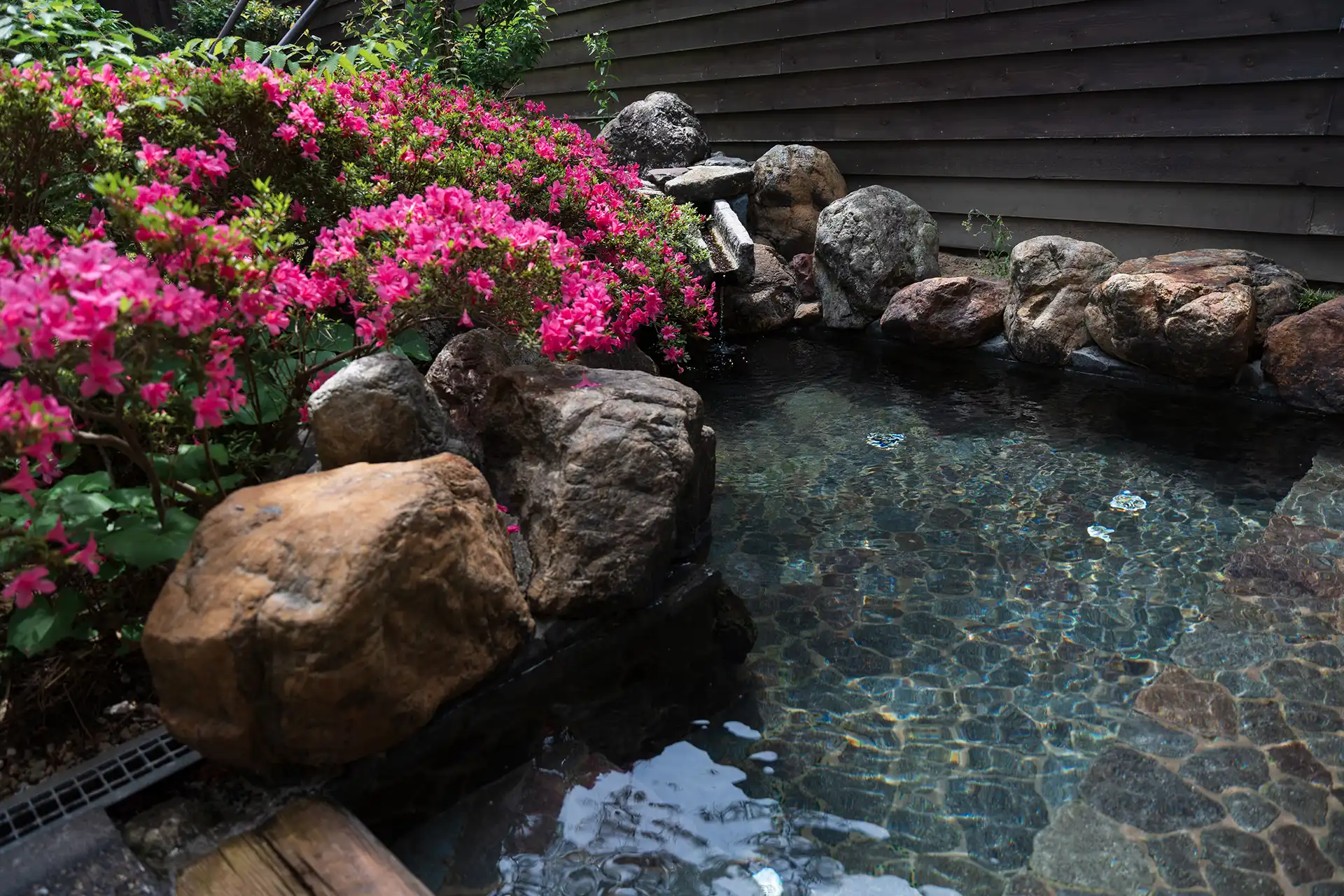
At 10:00 p.m., the baths ‘Tsukikage no Yu’ and ‘Kawakaze no Yu’ are switched between men and women.
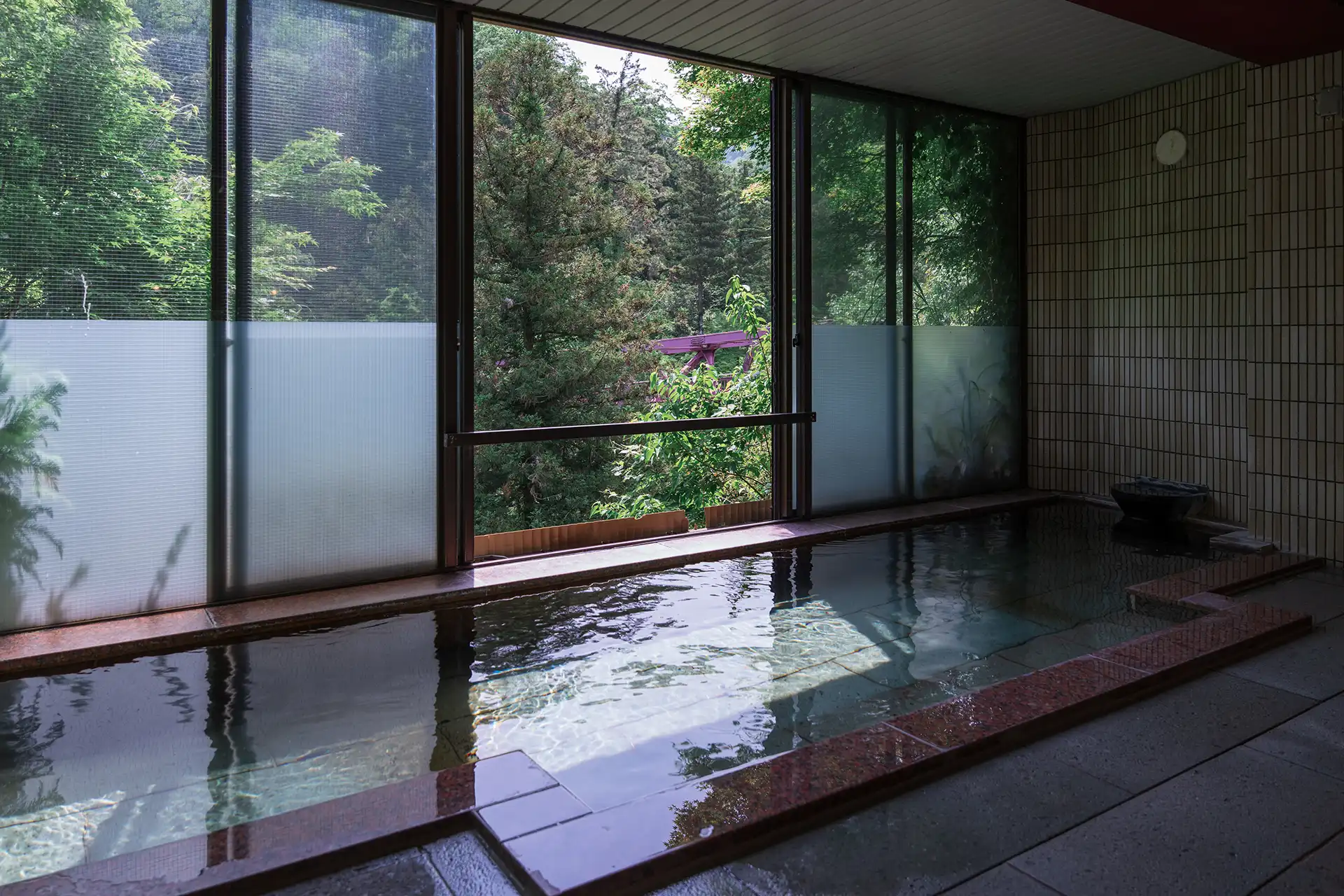
From here, you can enjoy views of the scenic Kakusenkei Gorge and the iconic Ayatori Bridge—scenery that changes beautifully with each season and is unique to Kawakaze no Yu.
At 10:00 p.m., the baths ‘Tsukikage no Yu’ and ‘Kawakaze no Yu’ are switched between men and women.
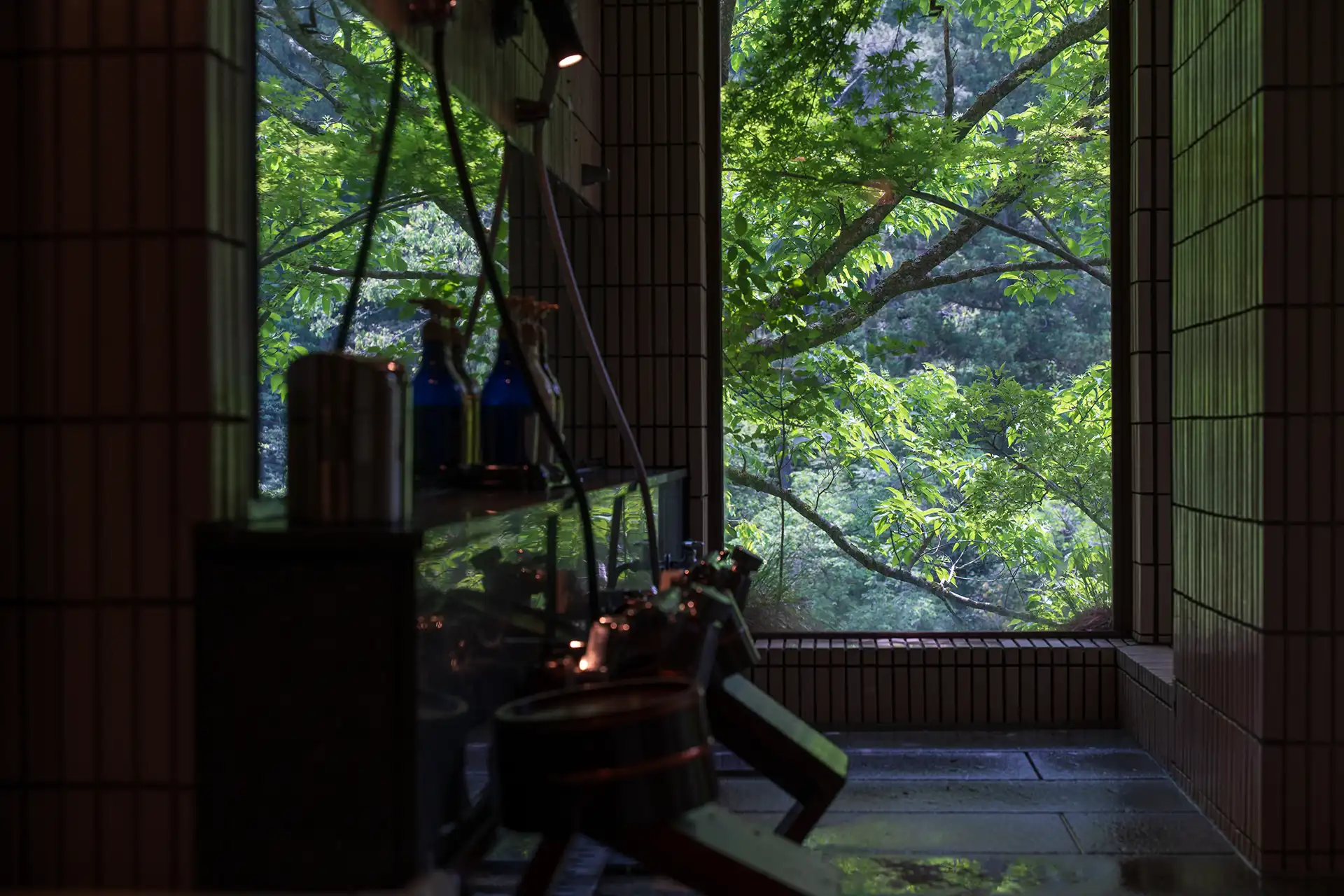
Designed for unhurried moments, it is an ideal setting for families to relax together and enjoy a truly private bathing experience.
Yamanaka Onsen: 1,300 Years of Timeless Healing
Yamanaka Onsen has soothed the illnesses and fatigue of countless people for centuries.
Its origins are said to date back some 1,300 years to the Nara period, when the eminent Buddhist monk Gyōki first discovered these healing waters.
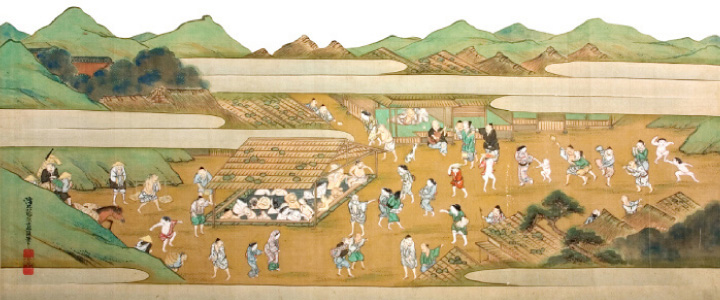
Later, toward the end of the Heian period, Hasebe Nobutsura, a local feudal lord of the Noto region, witnessed a wounded white heron bathing in a stream flowing from the mountains, healing its injuries.
Moved by this sight, he dug at the spot, where a small statue of Yakushi Nyorai—the Buddha of healing—emerged along with a fresh spring of hot water.
It is said that this event led to the establishment of twelve bathhouses, marking the beginning of Yamanaka Onsen as a hot spring village.
Time passed into the Genroku era, when the renowned haiku poet Matsuo Bashō traveled throughout Japan.
In his famous travel journal The Narrow Road to the Deep North, Bashō composed the following verse about Yamanaka:
“Yamanaka—
I will not pick the chrysanthemum;
the fragrance of the hot spring.”
Through this poem, Bashō expressed that the scent of the hot spring itself was more precious than the flowers before him.
He praised Yamanaka Onsen alongside Arima and Kusatsu as one of Japan’s three great hot springs and is said to have stayed here for nine days, deeply savoring both the scenic beauty and the restorative waters that eased the fatigue of his long journey.
More than 300 years have passed since then, yet even today, the pure waters that continue to flow here in Yamanaka remain unchanged—quietly and gently offering healing to all who visit.
- Spring Quality and Temperature
-
Calcium-sodium monosulfate spring, 48.3°C
- Primary Efficacy
-
Neuralgia, muscle pain, joint pain, frozen shoulder, bruises, chronic digestive disorders, hemorrhoids, sensitivity to cold,post-illness recovery, fatigue recovery, health promotion, arteriosclerosis, cuts, burns, chronic skin diseases, paralysis
- Drinking the spring water
-
Possible (Gallstones, chronic constipation, obesity, diabetes, gout)