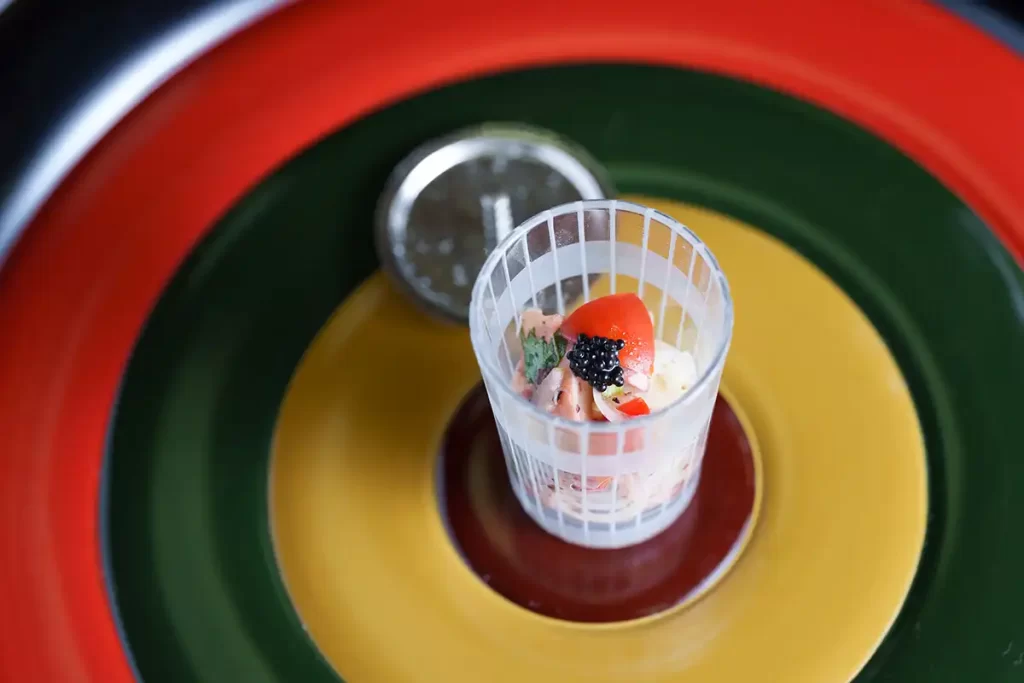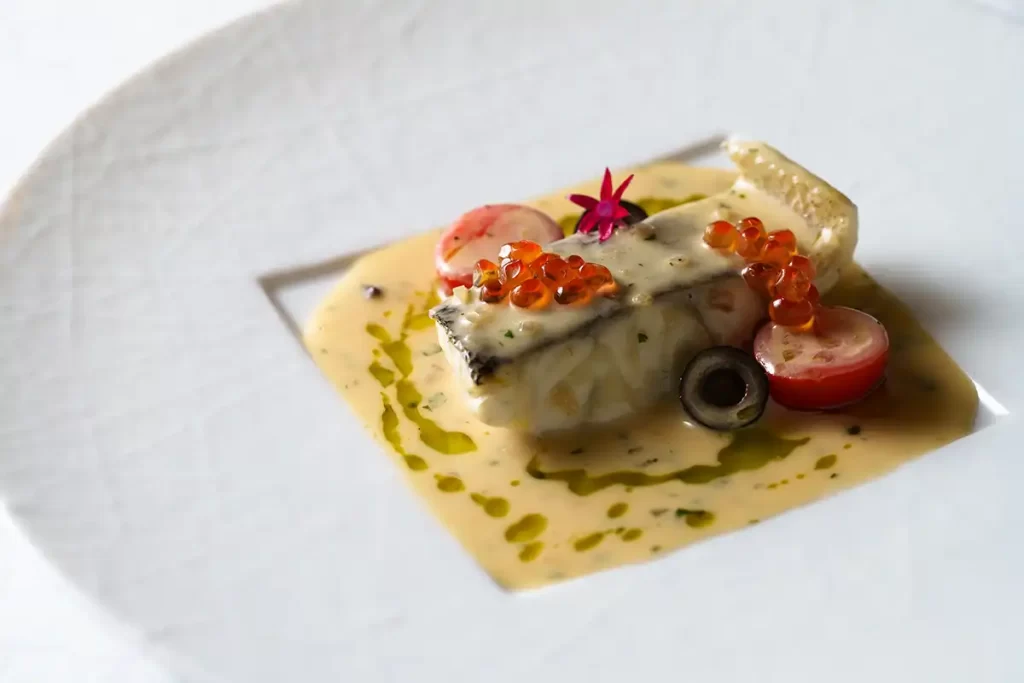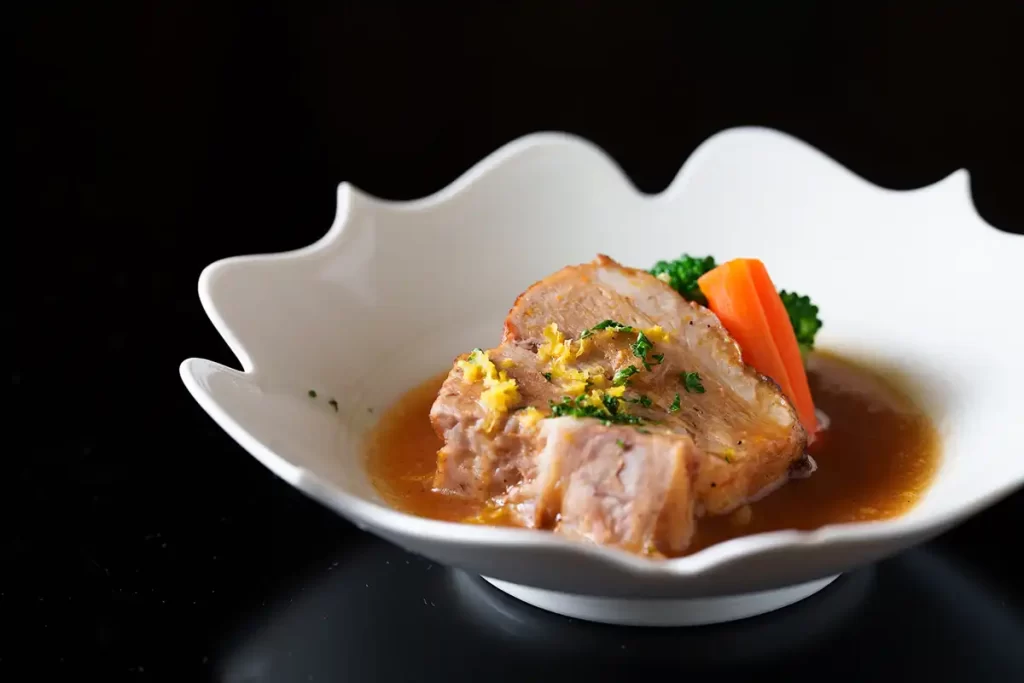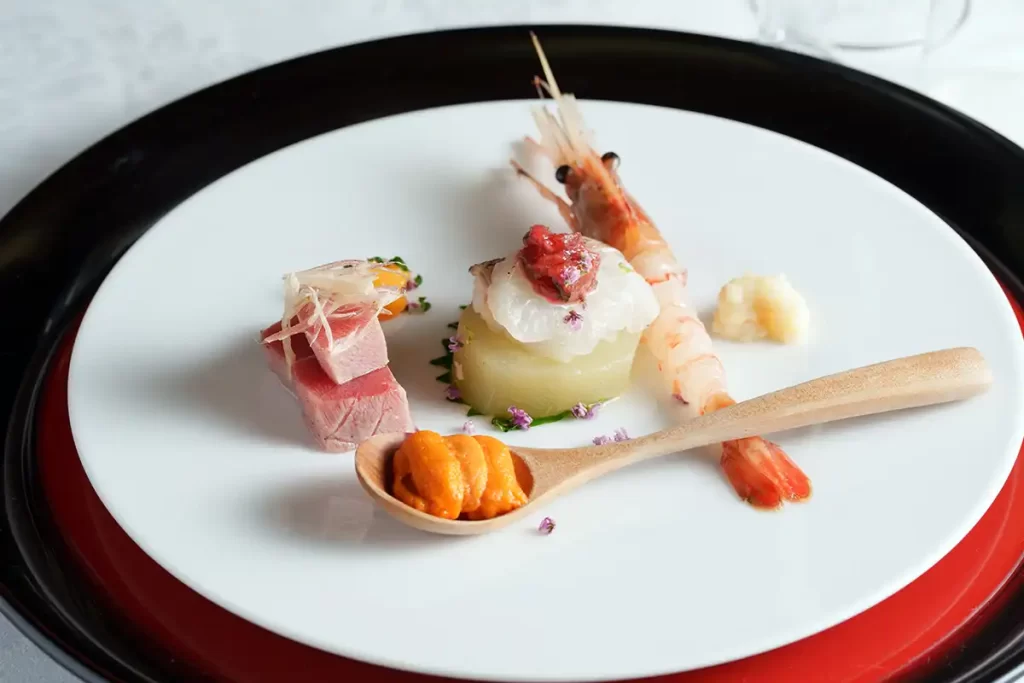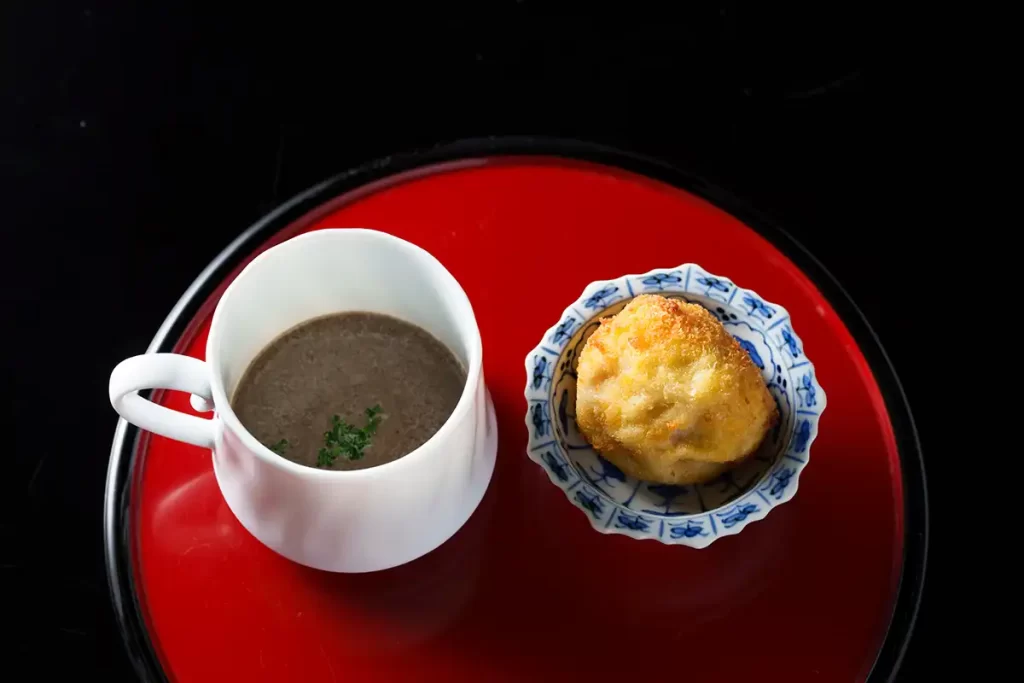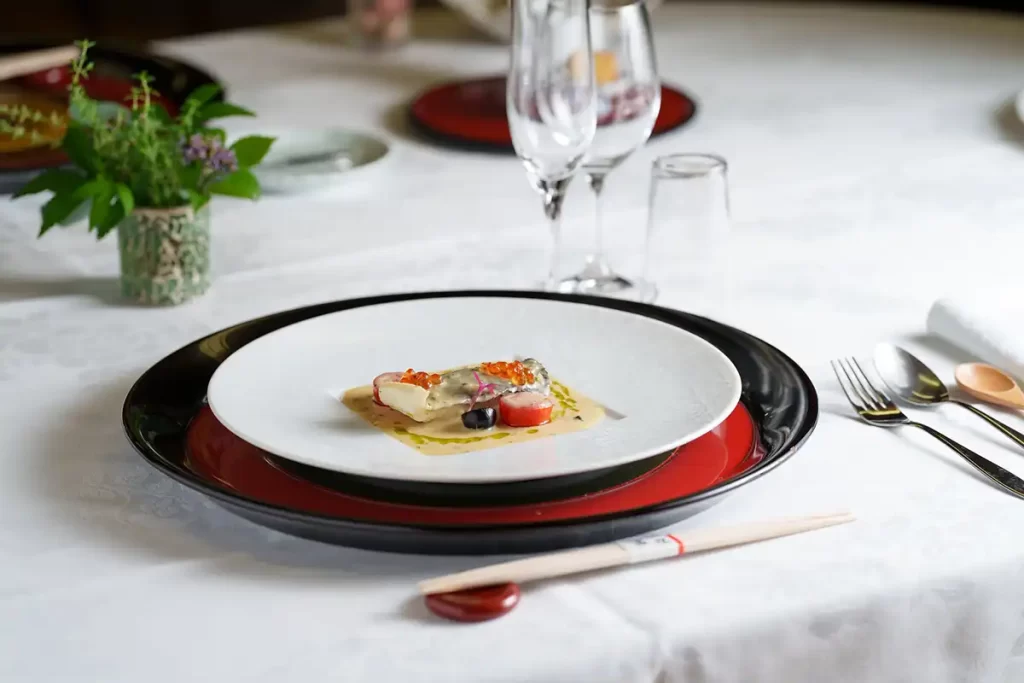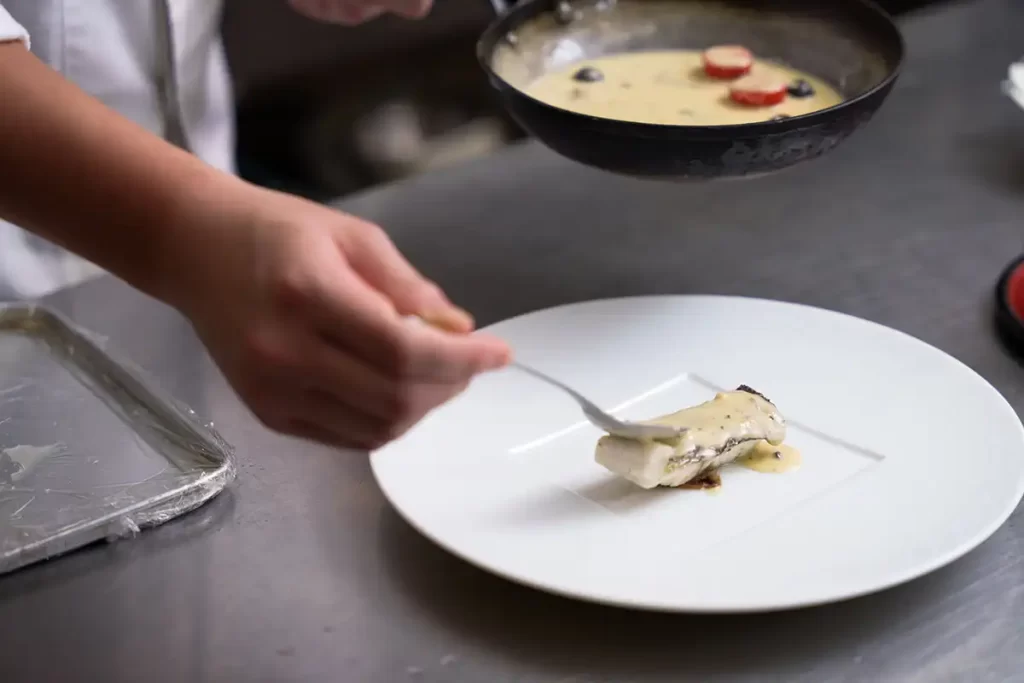
Our Chef’s Seasonal Creations
We cherish the ingredients that have been passed down in this land for generations, hoping that travelers can experience the true character of the region through food.
Within each dish, there is inspiration, a sense of encounter, and ultimately, a feeling of comfort and reassurance.
By incorporating traditional local cuisine and time-honored cooking techniques from the Kaga region into our kaiseki meals, we express the culinary heritage of this area.
We also take great care in presenting our dishes using regional crafts unique to Kaga, such as Kutani porcelain and Yamanaka lacquerware, allowing our guests to enjoy not only the flavors, but also the harmony between cuisine and craftsmanship.
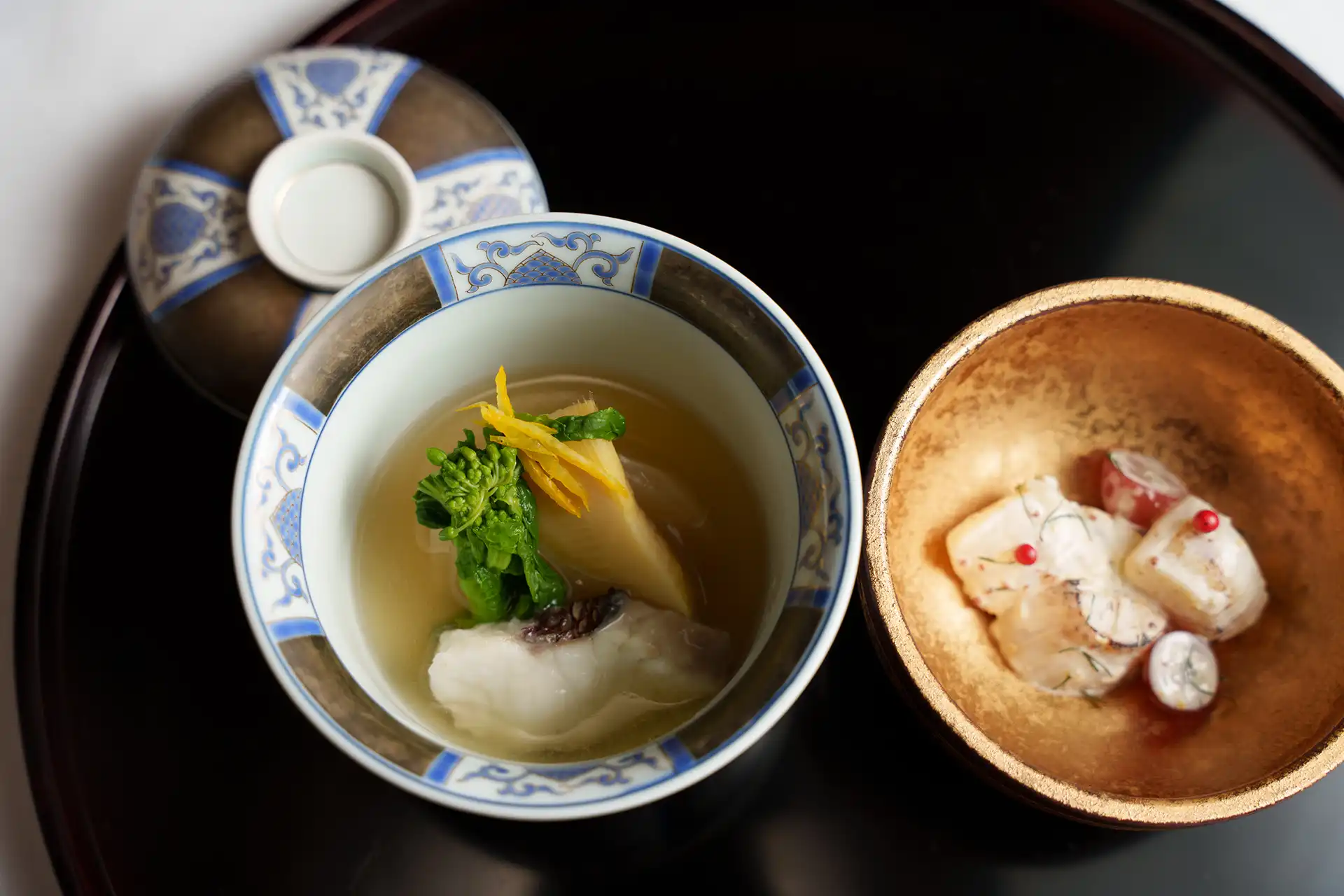
“Sweet shrimp,” “bamboo shoots,” and “tara-no-me (angelica tree buds)”
Their delicate, rich flavors gently melt away both your heart and your senses.
Kocho’s Spring Cuisine
A local specialty, bamboo shoots are one of the signature tastes of spring in Hokuriku.
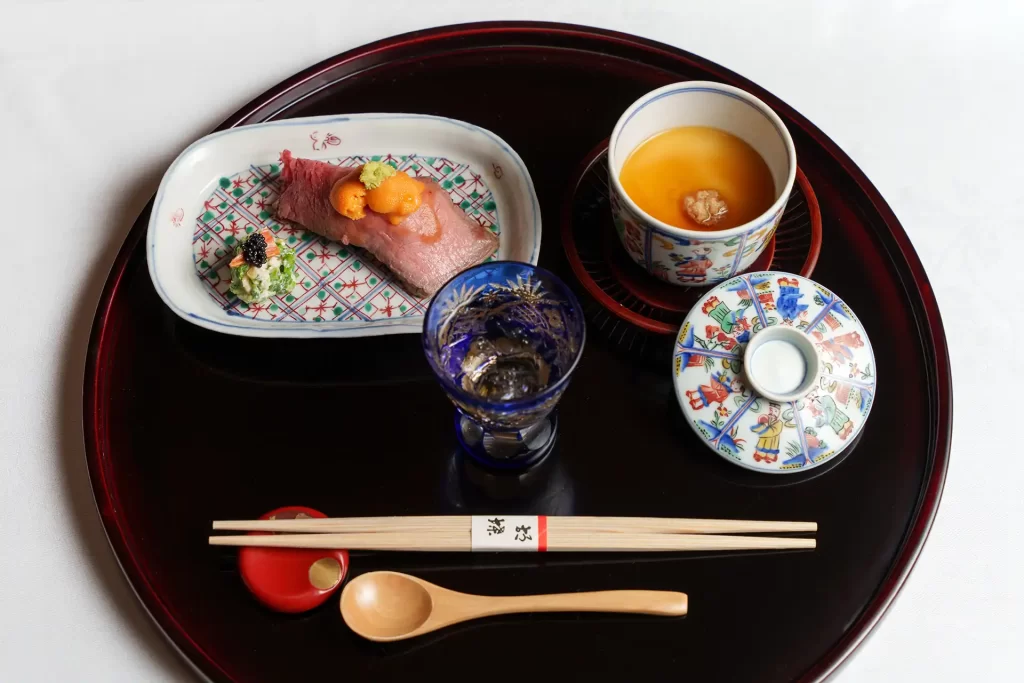

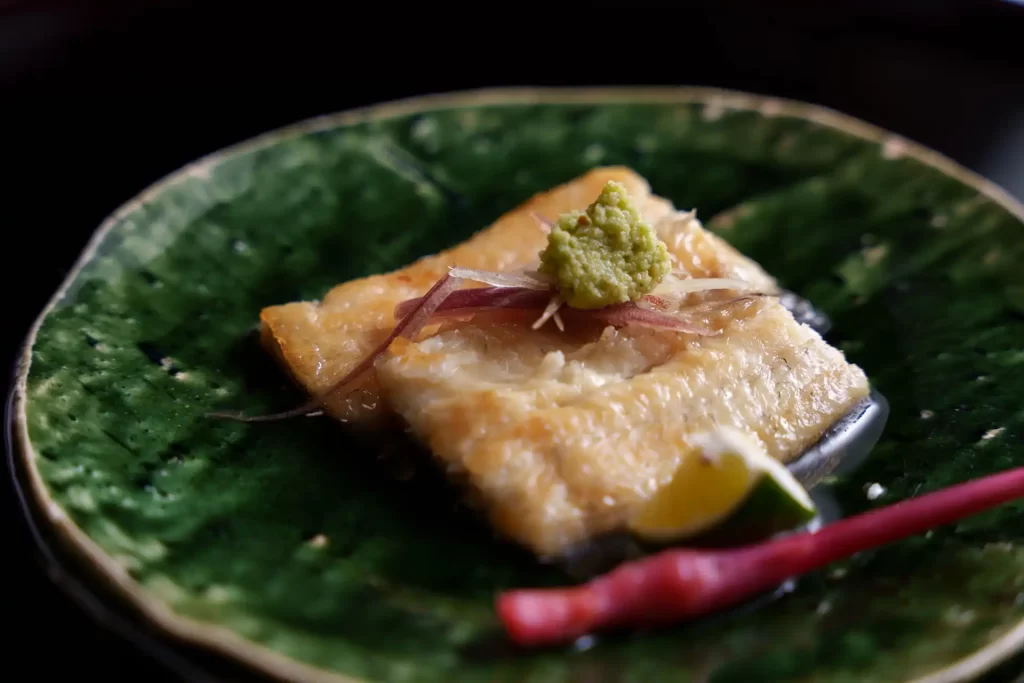
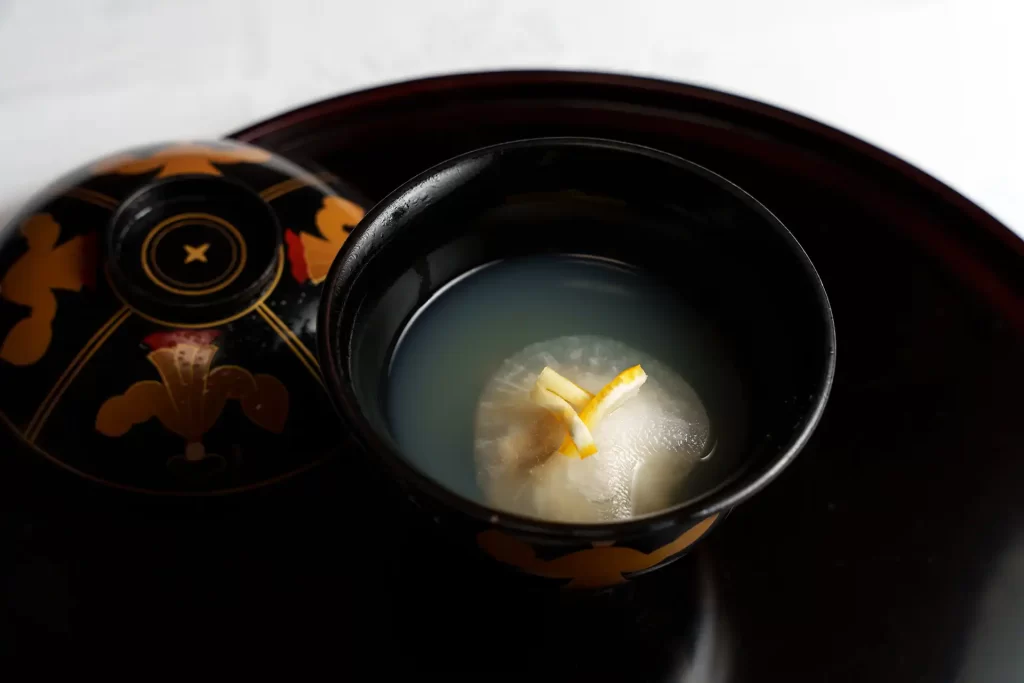
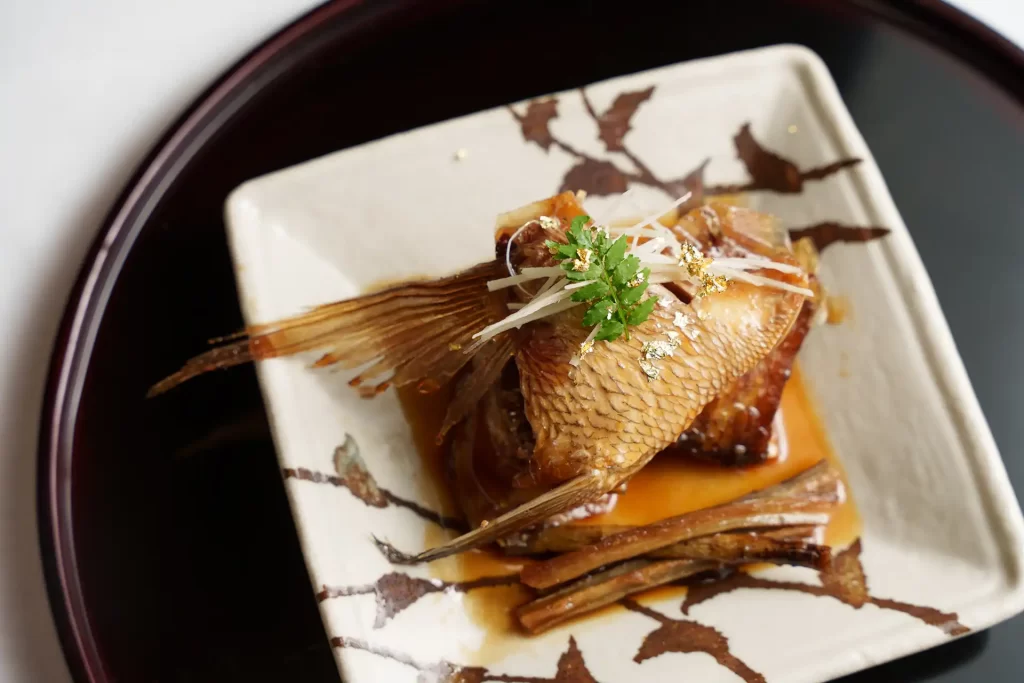
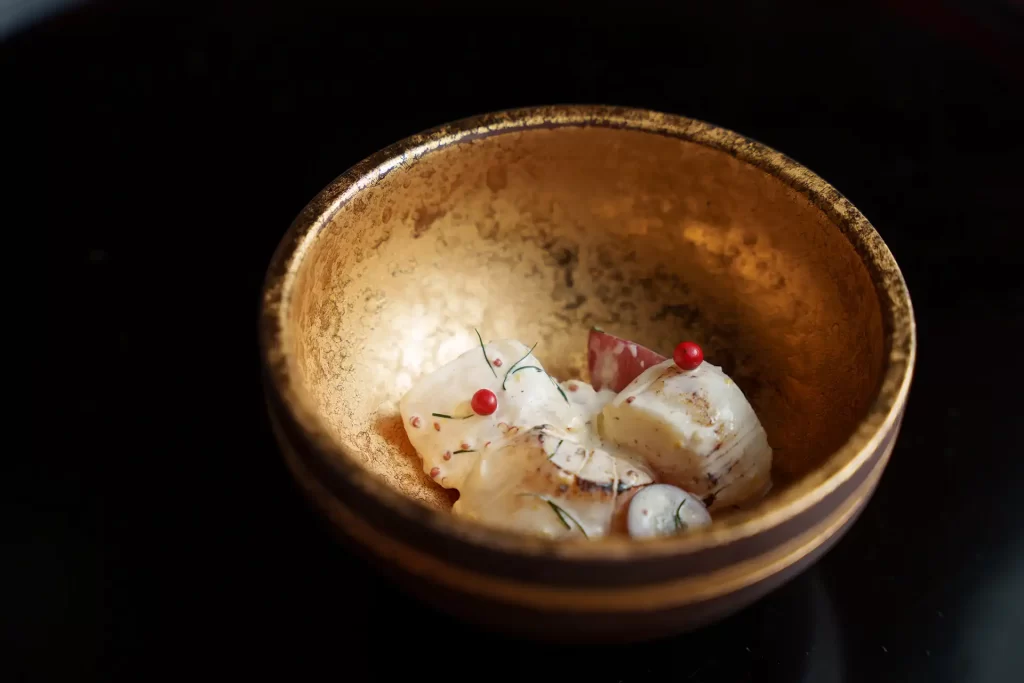

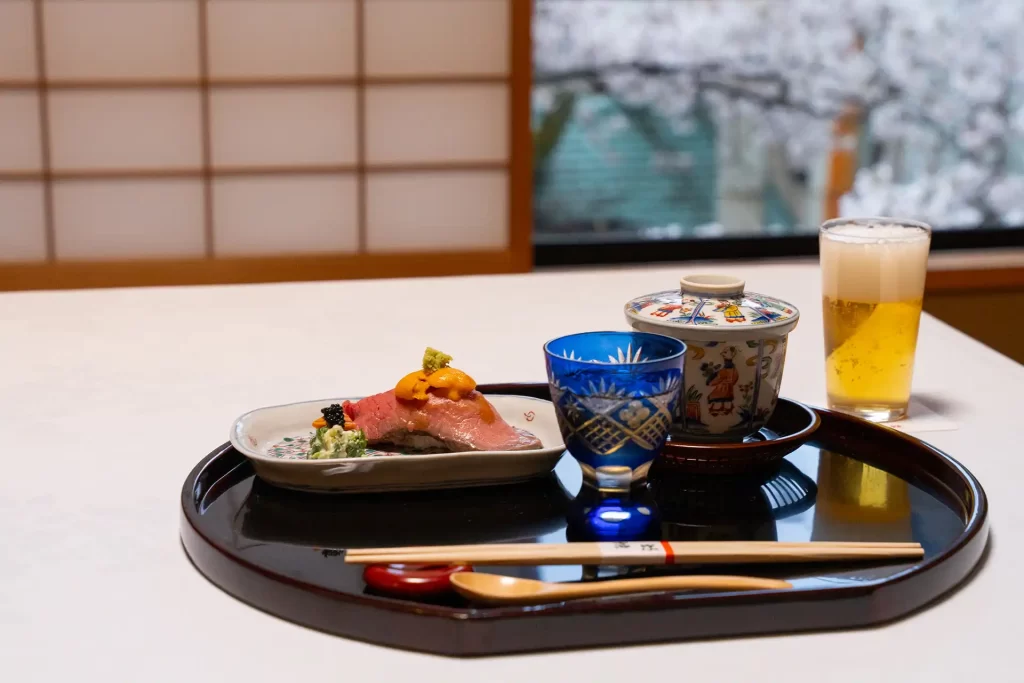
Traditional Japanese cuisine originally had no concept of a Western-style appetizer.
What most closely resembles an appetizer in Japanese cuisine is hassun, a course in kaiseki that expresses the season through a carefully composed selection of small dishes.
It was Kitaōji Rosanjin who first introduced the idea of an ‘appetizer’ in Japanese dining at Hoshigaoka Saryō.
It is said that Rosanjin’s approach to creating appetizers began with the principle of using every ingredient to its fullest.
This was not an act of frugality, but a philosophy rooted in respect—never wasting what nature provides.
For example, when preparing sashimi, small trimmings inevitably remain.
By lightly salting these pieces and curing them with kelp (kombu-jime), they could be transformed into a refined dish in their own right.
Rather than purchasing ingredients specifically for appetizers, Rosanjin focused on thoughtful presentation and color, harmonizing vegetables, fish, and meat, and balancing flavors—sweet, salty, sour, and savory—within a single composition.
Kitaōji Rosanjin is regarded as one of the last great culinary masters of the Shōwa era, a figure who fully embodied the spirit of Japanese and kaiseki cuisine.
His cooking philosophy seems to offer a quiet yet profound message to modern Japanese cuisine, which often risks excess in an age of abundance.

A letter written by Rosanjin
Here is a letter in which Rosanjin wrote about his philosophy of cooking.
“If the ingredients are humble, one should prepare them in a way that brings out their true worth;
if the ingredients are fine, one must take care not to diminish their quality.
To create good food in this way brings brightness to life.
More proactively, one learns to draw deliciousness from modest ingredients,
or to create simple, unpretentious dishes even from costly materials.
Such understanding naturally comes with continued learning and experience.”
Some people hear the word ‘tea’ and immediately imagine rigid rules and formality, causing them to shy away from it. But is that really the case?
To me, tea embodies an essential spirit that anyone devoted to cuisine should never lose. Everything related to tea is thoughtfully designed, deeply rational, and grounded in reason.
The procedures and customs of tea—such as the tea ceremony and kaiseki dining—may differ among various schools, yet the fundamental philosophy remains the same.
We are fortunate in this country to experience four distinct seasons. Having grown up within them, we carry an innate sensitivity to the changing seasons. To appreciate the beauty of nature—flowers, birds, wind, and moon—and to savor delicious food is, I believe, the very foundation of human sensibility.
Regardless of whether one practices tea, and beyond the boundaries of Japanese cuisine or even national borders, cooking begins with the simple truth that food exists to bring joy to people. Through the daily accumulation of this work, I hope to continue learning what truly matters as a human being—through cuisine.
Head Chef Syuji Mitani

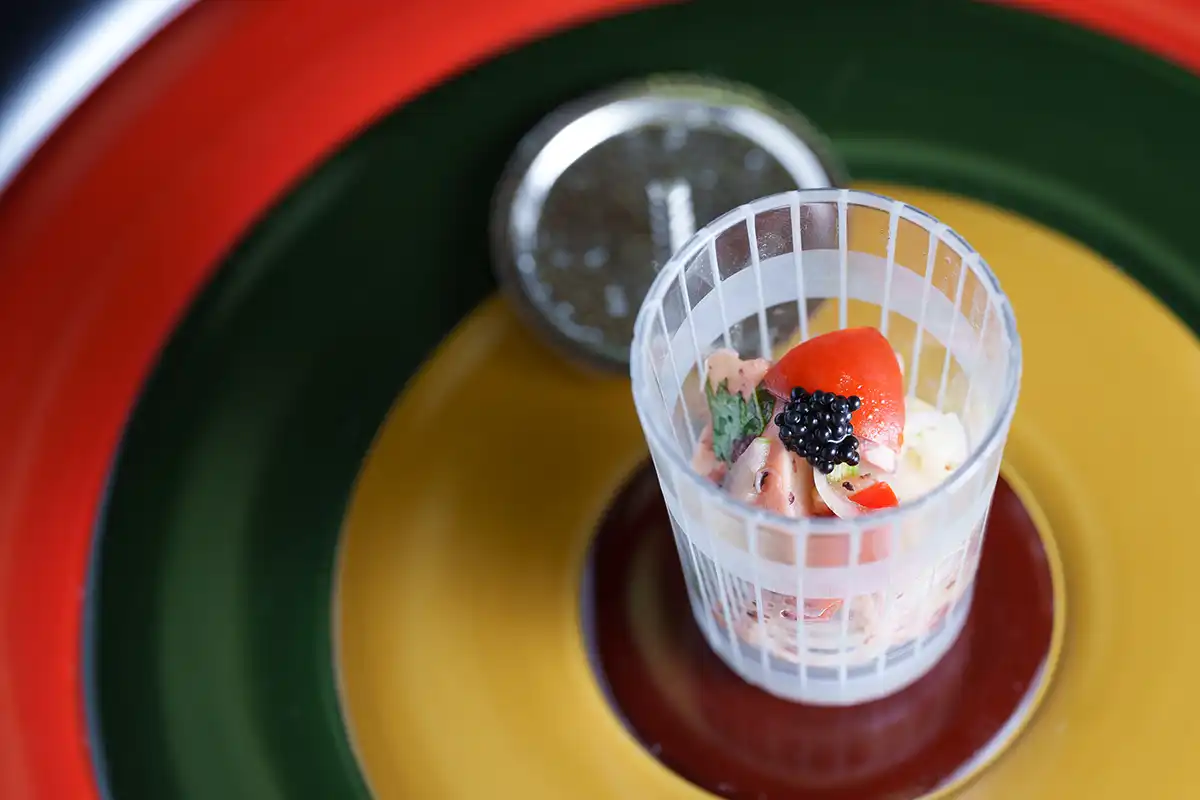
Contemporary French Cuisine
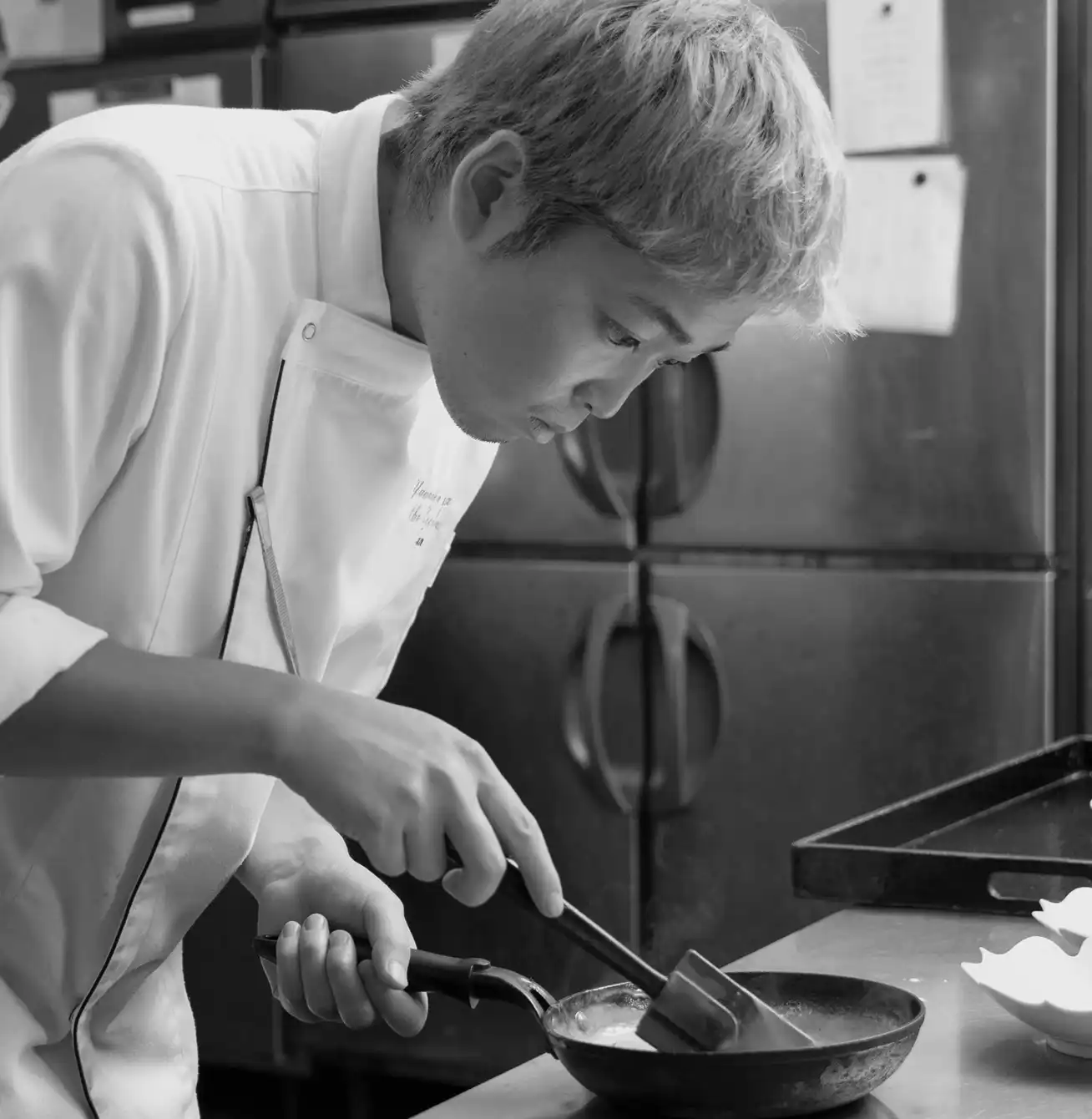
With gratitude and inspiration always in our hearts, we dedicate ourselves each day to serving our guests.
These two values can only be truly felt when they are guided by genuine kindness.
Cuisine is a bond between people. Through food, new discoveries are made, and moments of inspiration are born—experiences unlike anything one has tasted before.
As chefs, we are deeply moved by the expressions of delight we see on our guests’ faces, and from that joy, a natural sense of gratitude arises within us.
When a guest’s happiness becomes the chef’s own happiness, and when cooking is guided by kindness, something truly exceptional is created.
This, we believe, is both the origin and the pinnacle of cuisine.
Sous Chef Jyunichiro Mitani